We may earn money or products from the companies mentioned in this post. This helps support what we do and in no way costs you a thing.
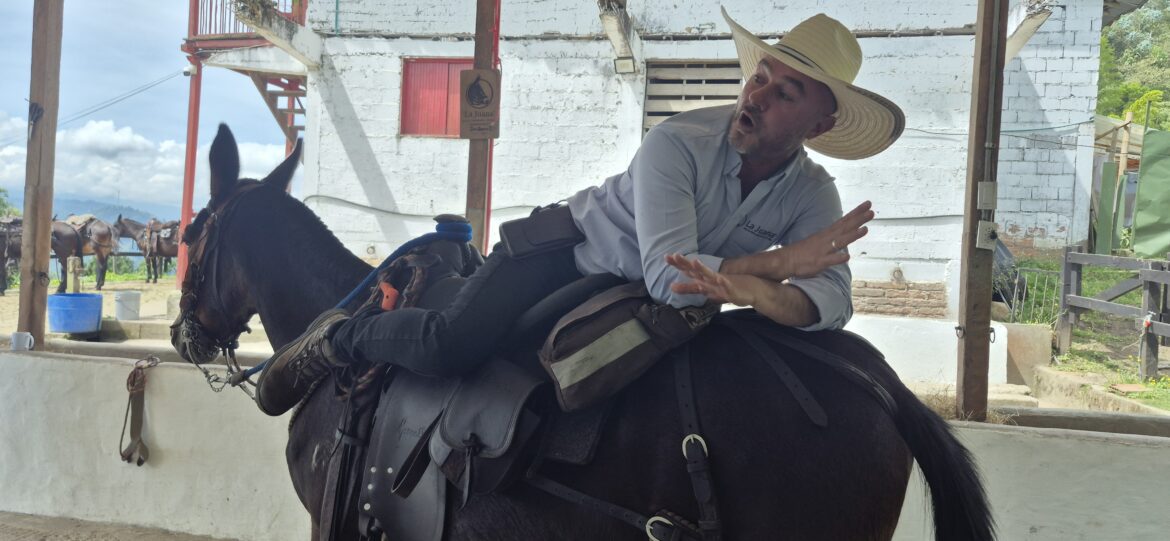
There’s a moment at La Juana when you swing onto a mule, take a breath, and look out over the Colombian mountains stretching in every direction. The rhythmic clip-clop of hooves becomes the soundtrack as you begin moving along the trail, the air feels fresher and quieter, and it occurs to you that people have traveled these steep, emerald slopes this way for generations.
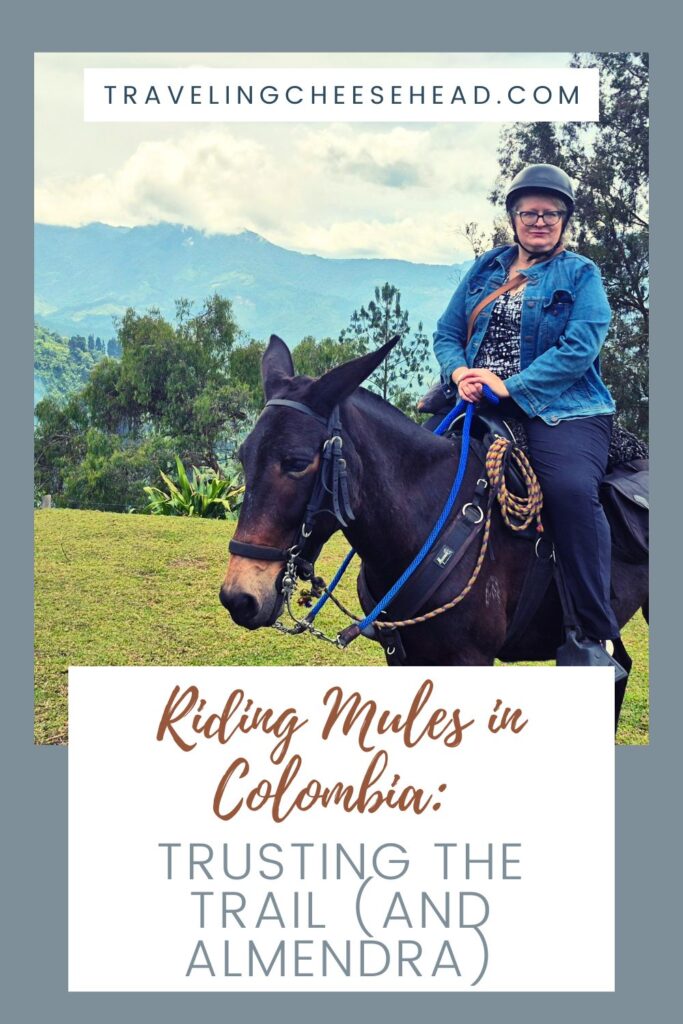
There was also something else I figured out fairly quickly: I was not in control.
My mule’s name was Almendra, and from the beginning, she made it clear that we were going to do things her way. She was steady and calm, completely unfazed by terrain that had my full attention. Her pace was deliberate, never rushed or hesitant, and she seemed to know exactly where every hoof belonged before she put it there.
I realized this wasn’t going to be a ride where I guided Almendra through the Colombian mountains. This was going to be a ride where Almendra guided me.
My job was to trust her.
Why Mules Make Sense in Colombia’s Coffee Region
To understand why Almendra was so good at her job, you have to understand the landscape. Colombia’s coffee country is beautiful, but those mountains aren’t necessarily interested in making travel convenient.
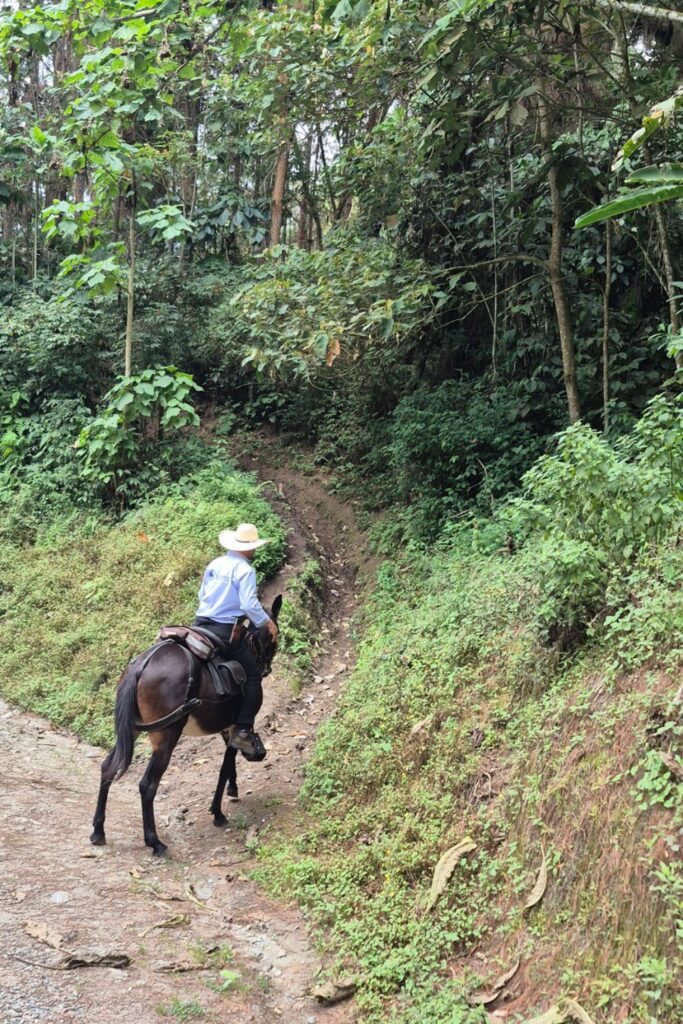
Trails wind through coffee farms, climb ridges and descend slopes that can be rocky, muddy, narrow and uneven. In places where machinery would struggle or roads simply don’t go, mules have carried people, coffee and supplies for generations.
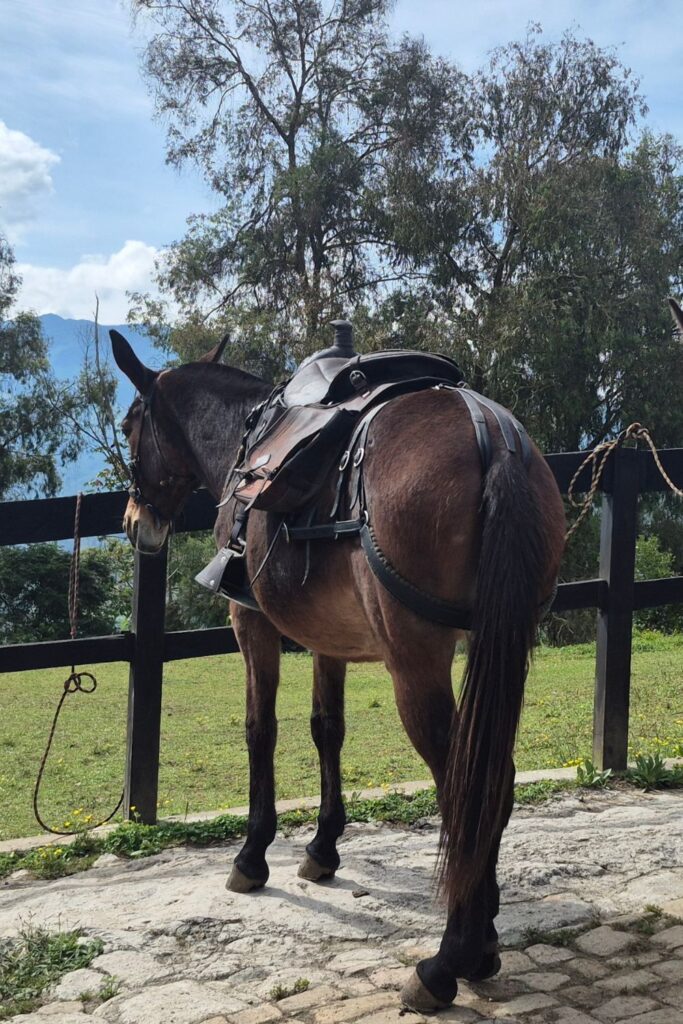
A mule is a cross between a horse and a donkey, combining the size and strength associated with a horse with the sure-footedness and self-preservation instincts associated with a donkey. On these mountain trails, those traits become considerably more impressive than they sound on paper.
I watched Almendra place her hooves carefully, adjusting for the slope and texture of the ground without any apparent concern about the person sitting on her back wondering whether perhaps we should discuss this first. Every step felt intentional. She wasn’t interested in speed or impressing anyone. She was interested in getting us where we were going safely.
After a while, I started realizing that the smartest thing I could do was stop second-guessing the four-legged expert.
“Stubborn” Might Be the Wrong Word
Mules have a reputation for being stubborn, but after spending time with Almendra, I started thinking that reputation may say more about humans than mules.
Mules think.
If something doesn’t seem safe, they aren’t necessarily going to blindly do it because a person tells them to. That independence can look like stubbornness when you’re the human expecting immediate obedience, but on the side of a Colombian mountain, I found myself appreciating an animal willing to question a bad idea.
Almendra also had definite opinions about pace. On flatter portions of the trail, she was perfectly content to take her time. We moved along at an almost meditative rhythm, giving me plenty of opportunity to take in the mountains around us. Once I stopped wondering whether we should be moving faster, I realized she had the better plan.
Then we rounded a corner.

I Didn’t See the Drop Coming
I didn’t see the downhill slope ahead of us because the trail turned sharply around a tight corner. One moment we were moving along comfortably, and the next thing I knew, we were going down.
And I mean DOWN.
I know it wasn’t actually as steep as it felt from Almendra’s back, but my body was quite certain we were going face-first down the side of a Colombian mountain.
Almendra, meanwhile, had absolutely no concerns.
The same mule who had been perfectly content to stroll along the flatter sections suddenly shifted gears. She picked up her pace and headed downhill with considerably more enthusiasm than I expected. There is a very specific moment when the animal underneath you makes a decision and you realize you’ve moved from participant to passenger. I held on, laughed out loud and trusted that Almendra knew something I didn’t.
She did.
What felt dramatic from my position on her back was routine to her. She never stumbled or seemed uncertain. Every hoof landed exactly where it needed to, and every movement remained controlled. I may have felt like I was pitching forward toward Colombia, but Almendra was simply efficiently navigating a trail she’d probably considered no big deal at all.
By the time we reached more level ground, I understood something important about mule riding: sometimes the animal underneath you has a much more accurate assessment of the situation than you do.
At La Juana, the Mules Aren’t Props
That ride would have been memorable anywhere, but what I learned about La Juana gave the experience considerably more meaning.
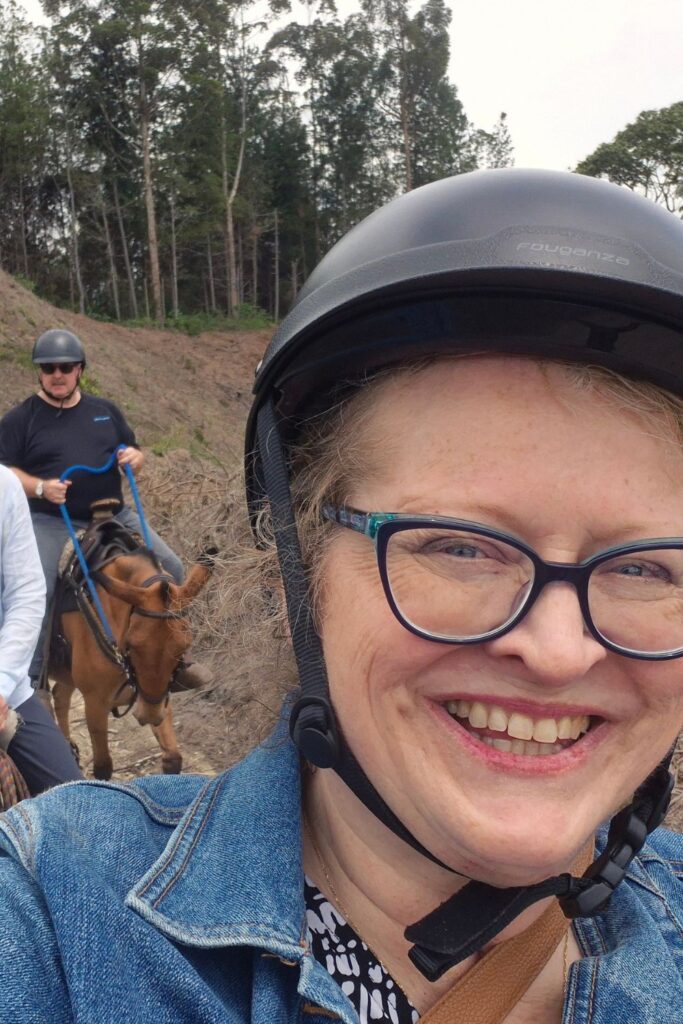
Their group mule tours take visitors into the mountains using a form of transportation that has been part of life here for generations. This isn’t a horse-and-buggy-style tourist prop inserted into the landscape because visitors expect something picturesque. Mules belong here. They have long been practical partners in moving people and goods through terrain that demands exactly the qualities these animals possess.
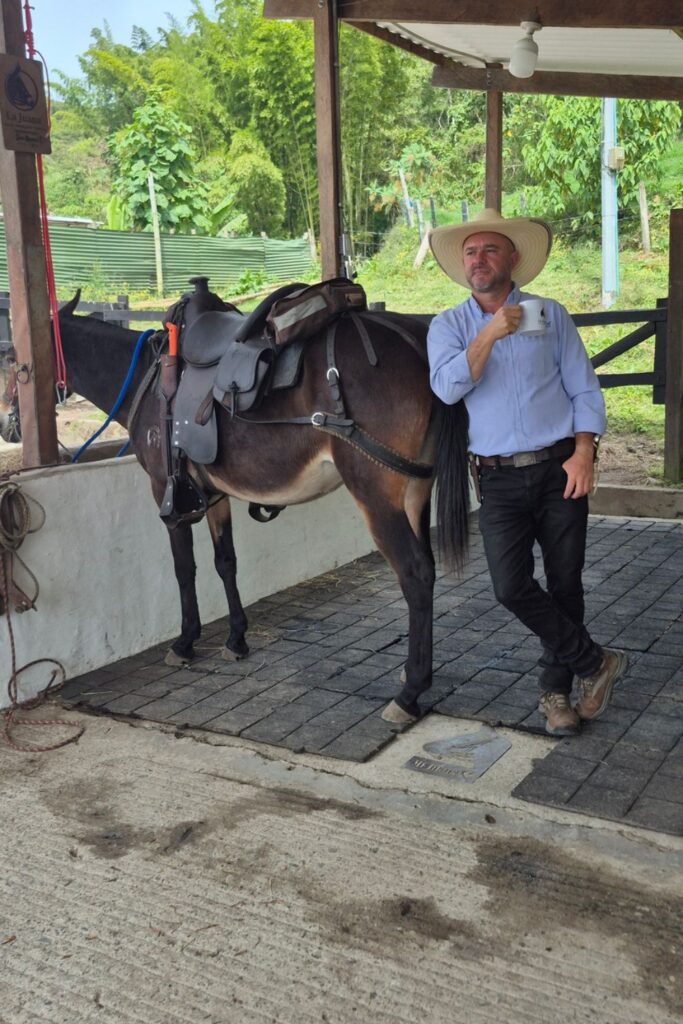
What stood out to me at La Juana was the relationship between the people and their animals. The mules were handled with familiarity and respect, and riders were thoughtfully paired with animals. You could tell these weren’t interchangeable pieces of equipment pulled out whenever a group of tourists arrived.
They knew their mules.
That became even clearer when I learned that La Juana is certified to work with individuals with special needs. Think about what that requires in this environment: knowledge of the animals, understanding the rider, careful pairing, patience, training and the ability to adapt an experience taking place on actual mountain terrain.
For someone like me who pays close attention to accessibility when I travel, that mattered. Accessibility doesn’t always mean removing the adventure from an experience. Sometimes it means finding the right adaptation, the right support and, apparently, the right mule.
Then They Told Me About the Wedding
If I needed any additional evidence of how much these animals are part of life at La Juana, I got it when I heard about the wedding.
They rode their mules.
That detail stuck with me because it said more than a paragraph explaining how much they love their animals ever could. The mules weren’t brought into their lives for tourists, and they weren’t included in the wedding because somebody thought it would make a cute photograph. They were there because they belong in the family’s story.
Once you understand that, the experience of riding through those mountains changes a little. You’re not simply participating in an activity. You’re getting a glimpse of a relationship between people, animals and landscape that has existed here far longer than you’ve been visiting.
Why Riding Almendra Stayed With Me
Riding Almendra through the Colombian mountains wasn’t simply about getting from one place to another. Somewhere along that trail, I stopped thinking quite so much about where she was putting her feet and started trusting that she knew exactly what she was doing. She had traveled terrain like this before. I hadn’t. Of the two of us, I was clearly the one who needed to learn something.
That trust also helped me understand why mules have remained so important throughout this region. They aren’t picturesque remnants of another era. For generations, they’ve carried people, coffee and supplies through terrain where other forms of transportation don’t always make sense. At La Juana, that relationship felt especially personal because these animals are known, cared for and woven into the rhythms and milestones of family life.
Travel has a way of putting you in situations where your normal instincts don’t help much. Mine told me that suddenly heading down a steep mountain trail while feeling as though I might go face-first was cause for concern. Almendra’s instincts told her to pick a path, place her feet and keep going.
Guess which one of us knew what she was doing?
By the time we finished our ride, I wasn’t trying to tell Almendra how to handle the mountain anymore. I held on, laughed and let the expert do her job.
She knew the trail.
I just needed to trust her.
FAQs About Riding Mules in Colombia
Why are mules commonly used in Colombia’s coffee region?
Mules are strong, sure-footed animals capable of navigating the steep, narrow and uneven terrain found throughout Colombia’s mountainous coffee-growing regions. They have traditionally been used to transport people, coffee and other goods where vehicles and machinery cannot easily travel.
What’s the difference between a mule and a horse?
A mule is the offspring of a male donkey and a female horse. Mules are known for their strength, endurance, intelligence and careful footing, which make them particularly well suited to difficult terrain.
Are mules really stubborn?
Their reputation for stubbornness is a little unfair. Mules have strong self-preservation instincts and may resist doing something they perceive as unsafe. After riding Almendra through the mountains, I’d call that good judgment.
Do you need riding experience to ride a mule?
Experiences and requirements vary by outfitter, so travelers should check directly with the operator before booking. At La Juana, riders are paired with appropriate animals and guided through the experience.
Is mule riding at La Juana accessible to travelers with disabilities or special needs?
La Juana has experience working with individuals with special needs, but whether this particular activity works for someone will depend on the individual traveler, their needs and current conditions. I recommend discussing specific mobility, balance, sensory or other considerations directly with La Juana before booking rather than relying on a general “accessible” label.
What should you wear for mule riding in Colombia?
Wear comfortable clothing suitable for changing mountain weather and secure, closed-toe shoes. Because trail and weather conditions can change, ask your tour operator about any additional clothing or equipment recommendations before your ride.
What was the most surprising part of riding a mule in Colombia?
For me, it was discovering how quickly Almendra could go from a leisurely stroll to confidently tackling a steep downhill trail. I didn’t even see the drop coming around the tight corner. She did—and that pretty much sums up our entire relationship.


