We may earn money or products from the companies mentioned in this post. This helps support what we do and in no way costs you a thing.
I went into this thinking it would be a simple fruit tasting. You know the kind. A few slices arranged on a table, maybe a quick explanation, a polite “oh that’s nice,” and then you move on to the next activity. But I soon learned that Colombia has 450 kinds of fruit, turning what I thought would be a quick bite into a massive, multi-sensory expedition.
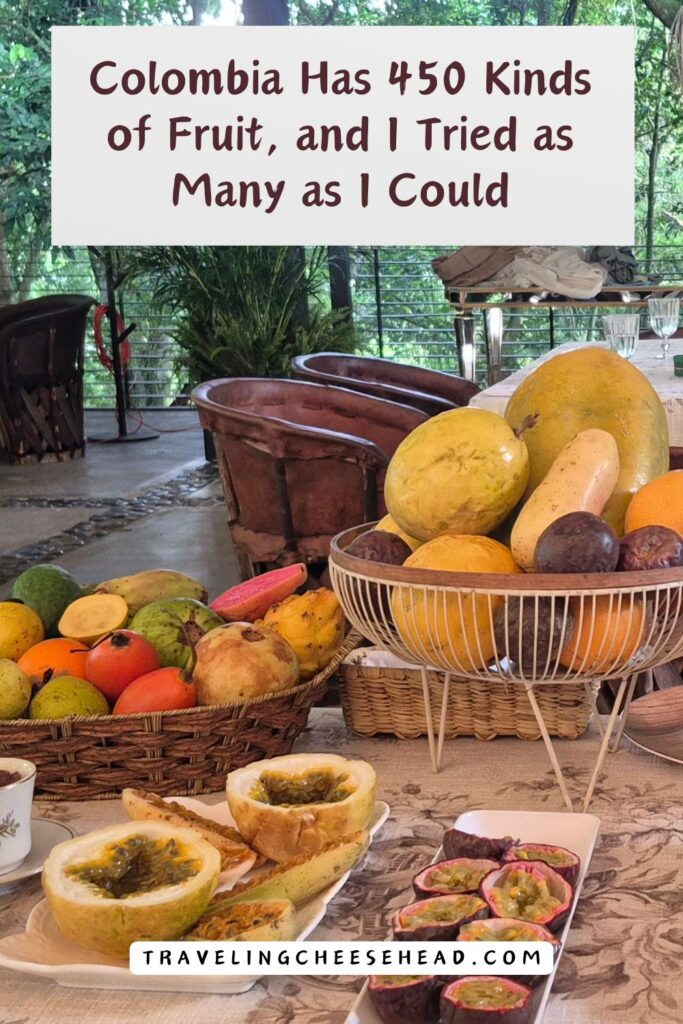
Instead, what I walked into at Hacienda San José in Pereira turned into a three-hour deep dive into color, flavor, culture, and curiosity. It was one of those experiences that starts small and quietly builds until you realize you are completely immersed in something you did not expect to matter quite this much.
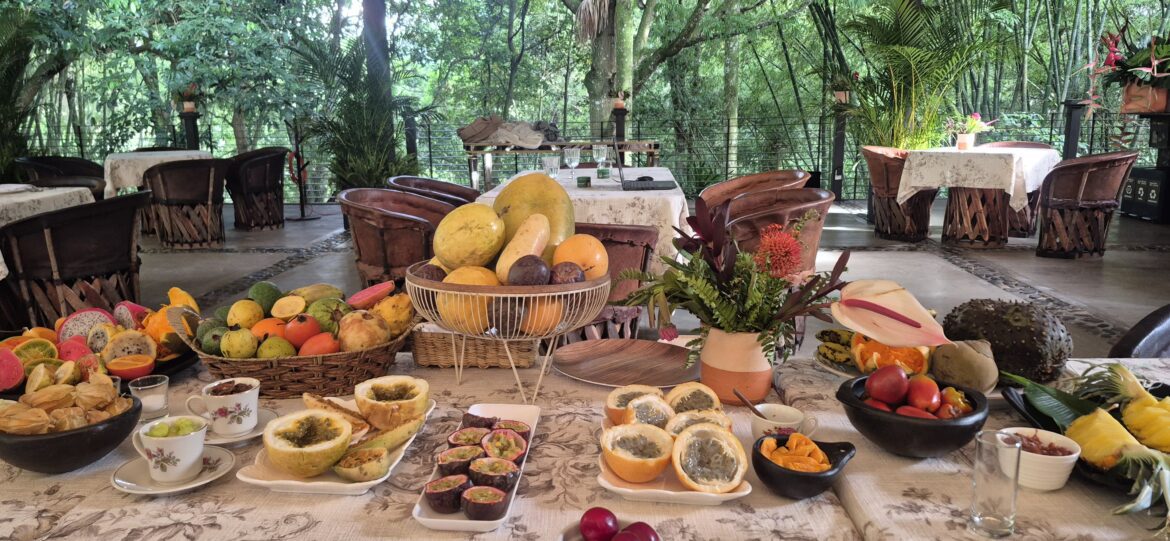
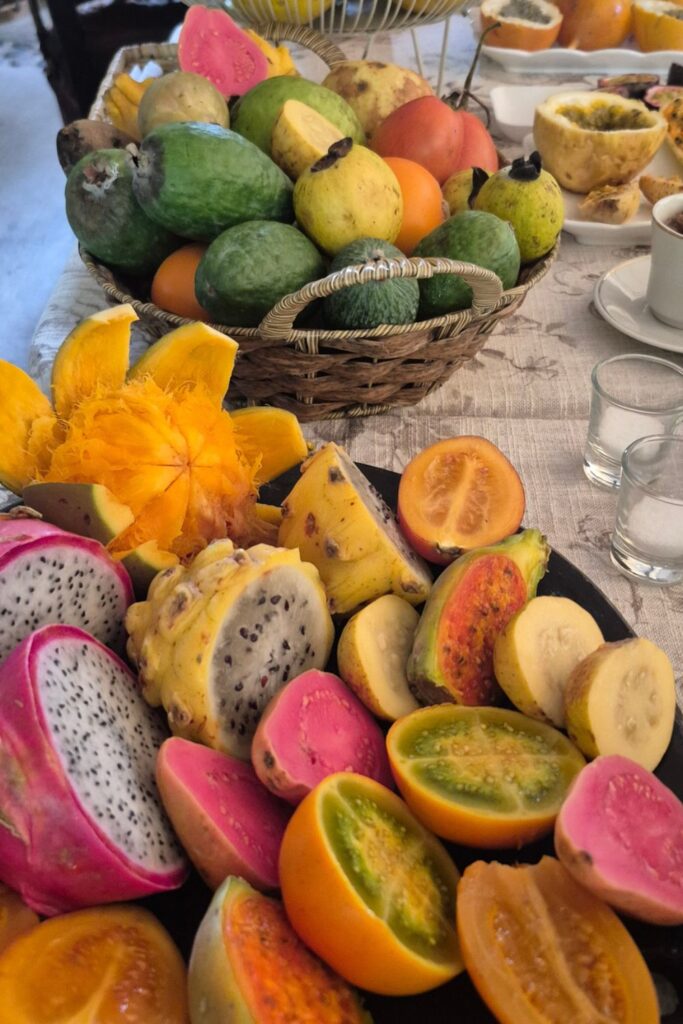
Colombia is home to more than 400 varieties of fruit, with many people citing closer to 450 depending on how you count regional variations. That number feels almost abstract until you are standing in front of a table filled with fruits you have never seen before. This was not a curated, minimalist display.
This was an abundance in every sense of the word.
Bright yellows, deep purples, greens that almost glowed, spiky exteriors, smooth skins, soft interiors, dense textures. Some fruits looked vaguely familiar, while others felt like they belonged in a botanical garden rather than on a tasting table. It was both exciting and slightly overwhelming, which is exactly where the fun begins.
Experiences and Identifying New Experiences
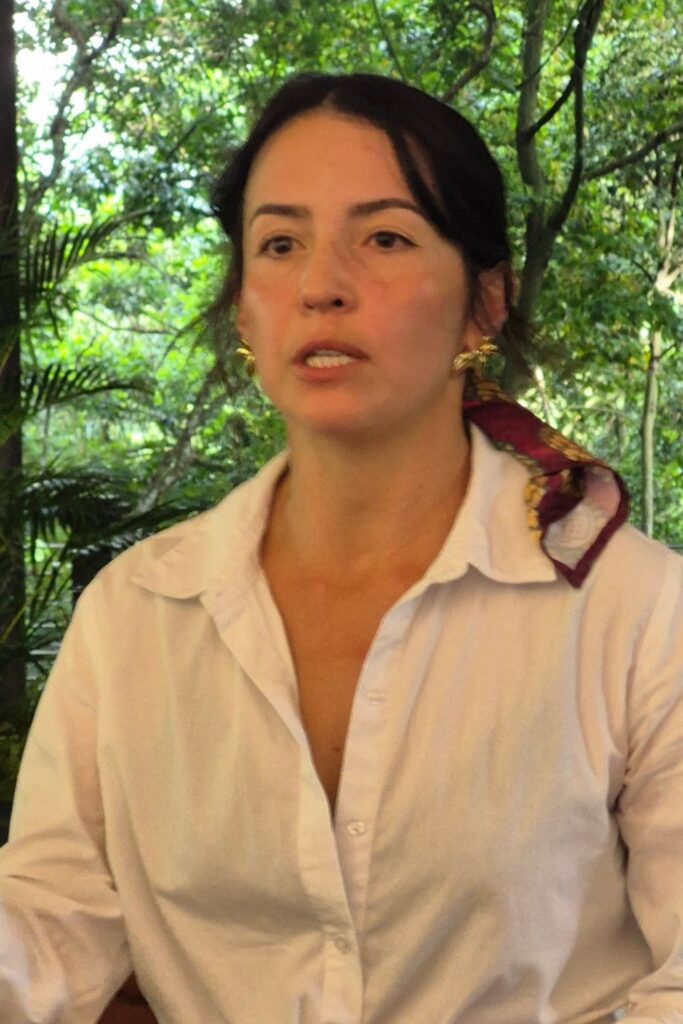
The experience was led by Adrianna Jaramillo of Iamcolombiano.com, and what immediately stood out was that this was not just about tasting fruit. It was about understanding it. Adrianna brought energy and pride that set the tone right away.
With the help of a bilingual guide, every explanation, every story, and every question felt like part of a conversation rather than a translation. There was no rush, no pressure to move along. Instead, there was space to be curious, to ask questions, and to simply experience what was in front of you.
There is something uniquely humbling about being handed a piece of fruit and realizing you have absolutely no reference point for what you are about to taste. We are so used to approaching food with some level of expectation. Even when trying something new, we tend to compare it to something we already know.
Here, that instinct does not always work. You take a bite expecting one thing, and within seconds it shifts into something else entirely. A fruit might start off tasting citrusy, then soften into something creamy, then finish with a subtle sweetness that lingers in a way you cannot quite define. It becomes less about identifying flavors and more about experiencing them.
As the tasting went on, something interesting happened. The focus shifted. At first, everyone was trying to guess what they were tasting, comparing notes, searching for the “right” description. But over time, the need to label everything faded.

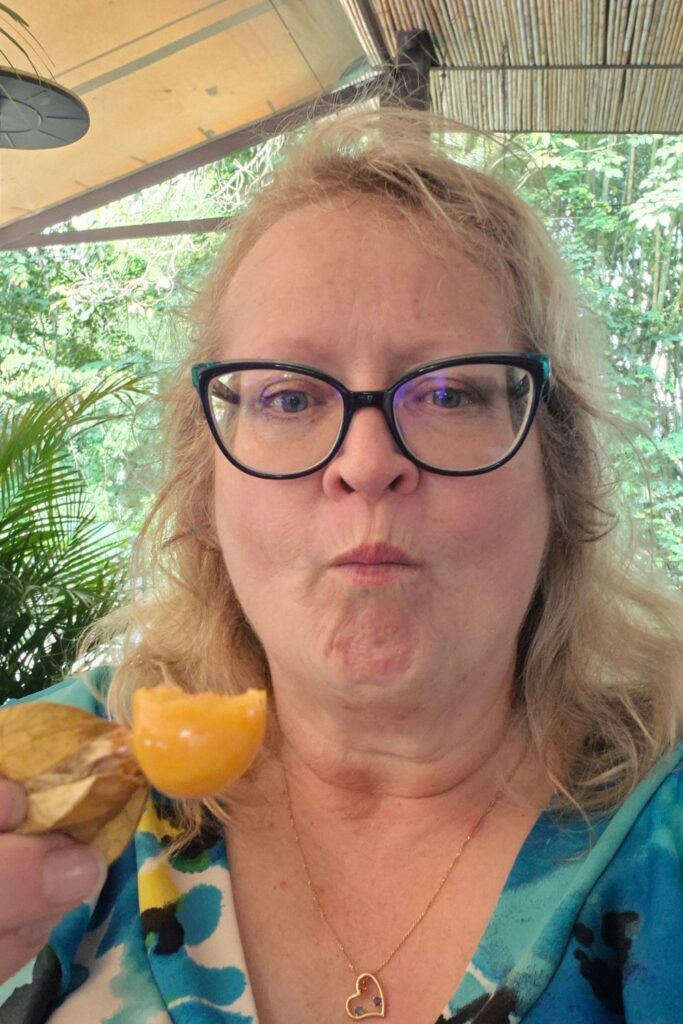
Instead, the experience became about reactions. Laughter started to replace analysis. People went back for second and third tastes, not because they needed to identify the fruit, but because they wanted to understand it a little better. It turned into a shared experience, one where everyone was discovering something new at the same time.
What made this particularly special was the storytelling woven into it. Adrianna did not just present fruit; she connected each one to its place within Colombian life. Some fruits were tied to specific regions, others to childhood memories, daily routines, or traditional uses. You begin to see that fruit here is not just a food group. It is part of identity, part of culture, part of how people connect with their environment.
That context changes everything. You are no longer just tasting something unfamiliar; you are participating in a piece of a much larger story.
It also serves as a reminder of how limited our everyday food experiences can be without us even realizing it. Most of us rotate through the same handful of fruits without giving them much thought. Apple, banana, maybe berries, depending on the season. Standing at that table, surrounded by options that felt endless, made it clear just how much more there is to discover. It was not about better or worse, but about expanding what is possible.
From a travel perspective, this is exactly the kind of experience that sticks with you. It is not flashy. It is not something you can check off a list in ten minutes. It requires time, attention, and a willingness to step outside of what is familiar. But in return, it gives you something far more meaningful. It gives you a sense of place that you cannot get any other way.
By the time the experience wrapped up, I could not tell you the names of every fruit I tried, and honestly, that did not matter. What stayed with me was the feeling of discovery, the conversations, the laughter, and the realization that something as simple as fruit could open the door to understanding a culture in a deeper way.
It was one of those moments where you realize that travel is not just about where you go, but how open you are when you get there.
Final Thoughts on Colombia Has 450 Kinds of Fruit
Did I try all 450 kinds of fruit in Colombia?
Not even close.
But I tried enough to know that I have only scratched the surface, and that is part of what makes it so exciting. Colombia does not just grow fruit. It celebrates it, shares it, and invites you to experience it in a way that feels both personal and unforgettable. If you find yourself in Pereira, make time for this. It may seem simple at first, but it can turn into something much more.