We may earn money or products from the companies mentioned in this post. This helps support what we do and in no way costs you a thing.
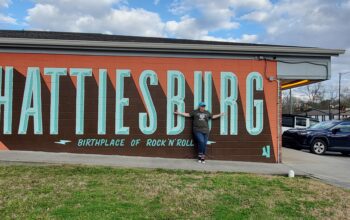
On a quiet street in Hattiesburg, Mississippi, stands a building that could easily be overlooked. No neon sign, no glossy plaque to pull you in. But pause for a moment, and you realize: this is the last remaining Black USO Club in the United States. Its weathered walls carry echoes of jazz notes, footsteps from tired soldiers, and the laughter of men and women who carved out joy in the midst of wartime and segregation.
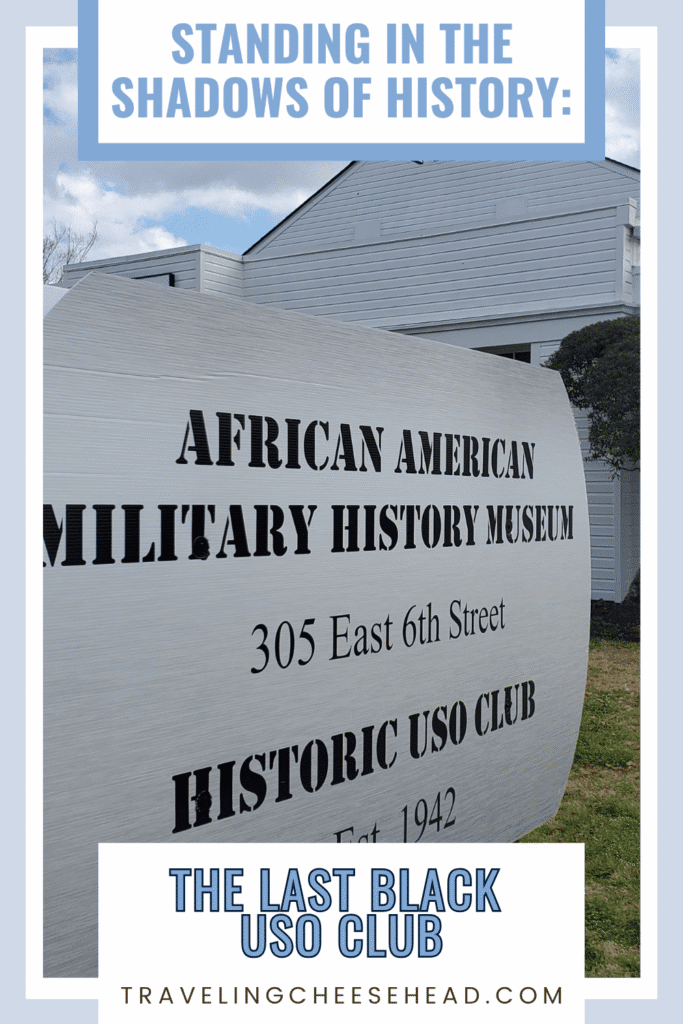
During World War II, hundreds of USO clubs were scattered across the country, providing soldiers with meals, entertainment, and a sense of home. But in the segregated South, Black servicemen needed their own clubs — not out of choice, but necessity. This building in Hattiesburg became one of those sanctuaries.
A Safe Haven in a Hostile South
It’s impossible to understand the importance of this place without confronting the reality of its time. Black soldiers wore the same uniform as their white counterparts, fought in the same war, and risked the same lives. Yet once they stepped off base in the South, they weren’t welcome in restaurants, movie theaters, or many stores.
One soldier’s oral history sums it up painfully well: “I had all this money in my pocket but not a place to eat.” Imagine being ready to defend democracy abroad while being denied a sandwich at home. That contradiction — sacrifice without equality — defined the experience of countless African American servicemen.
The USO in Hattiesburg changed that, if only for a few hours. Here, soldiers could grab a meal, listen to live music, and dance the night away without the sting of “Whites Only” signs. It was more than just recreation; it was dignity restored.
The Sounds of Community
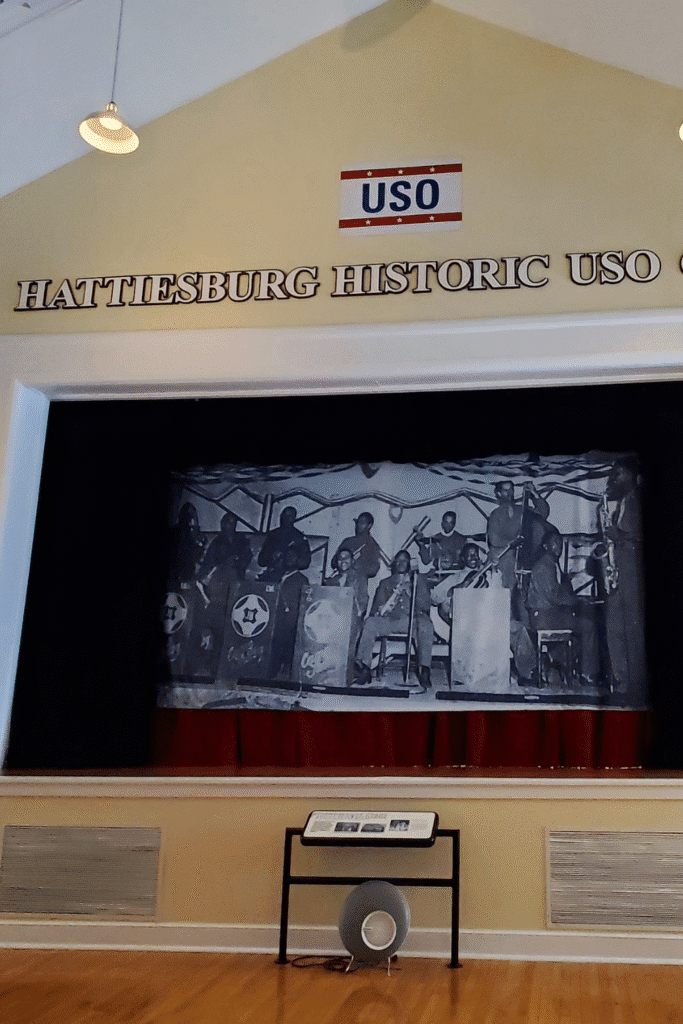
Step inside today, and it’s not hard to imagine the hum of life that once filled the room. The shuffle of cards slapped down at tables. The creak of dance floors under the weight of soldiers letting loose after long days of drills. The riffs of a jazz band cutting through cigarette smoke.
These clubs weren’t simply about distraction. They were about creating normalcy and community in a world where both were often stripped away. Local Black women volunteered their time, serving food and offering companionship.
Musicians traveled from across the region to perform, building a soundtrack that blended swing, gospel, and blues. In those moments, the war and segregation didn’t vanish — but they loosened their grip.
More Than a Club: A Testament to Resilience
The very existence of the Hattiesburg USO was an act of resilience. Built in the Jim Crow South, it provided a gathering place for soldiers who were often treated as second-class citizens in the very country they defended.
At the same time, it became a hub for culture. Black entertainers who couldn’t book gigs in white clubs found an audience here. Soldiers met, courted, and sometimes fell in love with local women here. Families gathered here to share news and stories. It was a building that didn’t just house activity — it nurtured community.
The Legacy Beyond WWII
When the war ended, many USO clubs closed or faded into obscurity. But Hattiesburg’s Black USO continued to serve its community, eventually becoming part of the foundation of the Civil Rights era in Mississippi. It stood as a gathering place for meetings, conversations, and the kind of quiet organizing that shaped movements.
Hattiesburg itself became a key site during the Civil Rights Movement — most notably during Freedom Summer of 1964, when volunteers flooded the city to help register Black voters. The spirit of resilience that once filled the USO club found echoes in these later struggles, linking one generation’s fight for dignity with another’s fight for equality.

Why This Building Matters Today
So why does it matter that this one building still stands? Because it is more than bricks and beams — it’s memory made tangible. Too often, the contributions and sacrifices of Black soldiers in World War II are overshadowed by broader narratives. But the Hattiesburg USO doesn’t let us forget.
Standing in front of it, you’re reminded that freedom wasn’t equally shared. That soldiers carried rifles abroad while carrying the weight of segregation at home. That joy, when it was found, was hard-won.
This club is not simply a piece of military history; it’s a testament to resilience, community, and the unyielding spirit of those who demanded dignity in an era that denied it.
Visiting Today
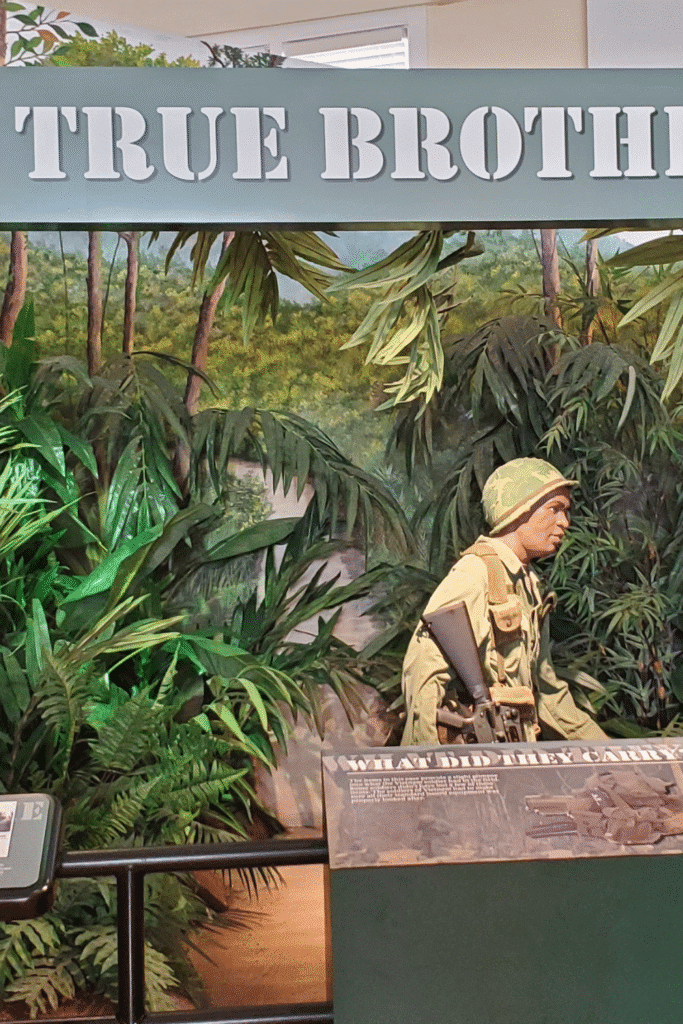
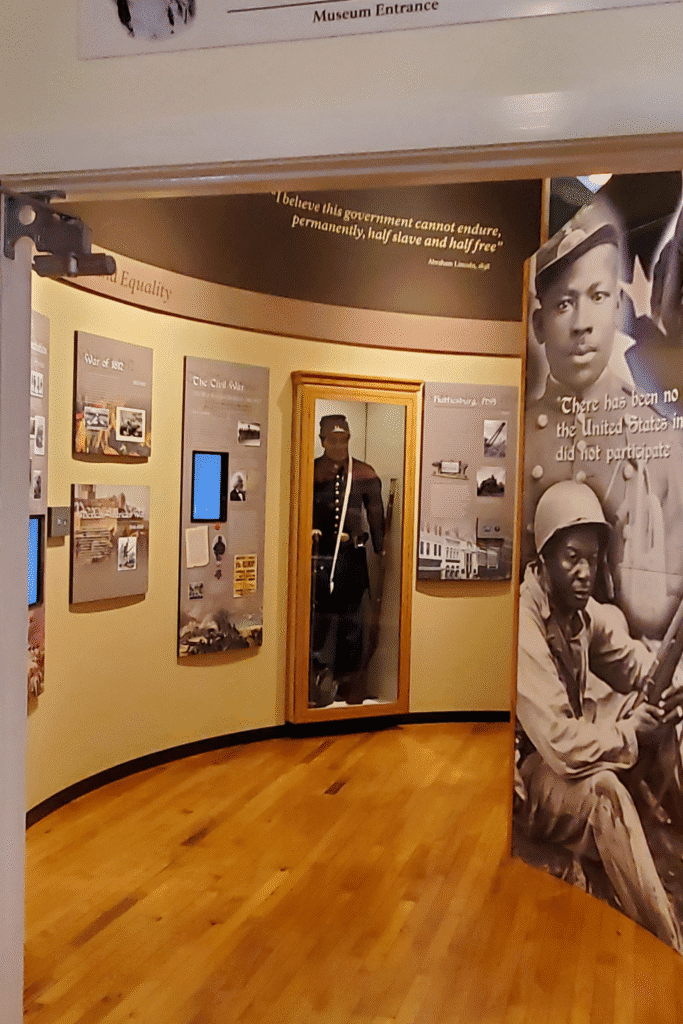
Travelers to Hattiesburg can visit the site as part of the Mississippi Freedom Trail, a route that ties together key locations of African American history across the state. Pairing a stop at the Black USO Club with a visit to the African American Military History Museum in Hattiesburg paints a fuller picture of the sacrifices and strength of Black servicemen. Exhibits there expand on the stories preserved within the USO walls, adding voices, faces, and personal artifacts to the narrative.
Walking through, you’ll find yourself doing more than just learning — you’ll be listening. Listening to voices that once said, “I had money in my pocket, but no place to eat.” Listening to music that once spilled from the stage. Listening to echoes of laughter, conversations, and footsteps that refuse to fade.
Final Thoughts
The Hattiesburg Black USO Club isn’t a grand monument. It doesn’t tower or dazzle. But maybe that’s the point. Its power lies in its quiet persistence, its refusal to disappear.
Visiting it is not about looking at a building — it’s about remembering the men and women who filled it, and the country they fought for, even when it didn’t fight for them in return. It’s about honoring stories that remind us that not all men were treated equally, but all carried the same hope: that someday, their contributions would be erased.